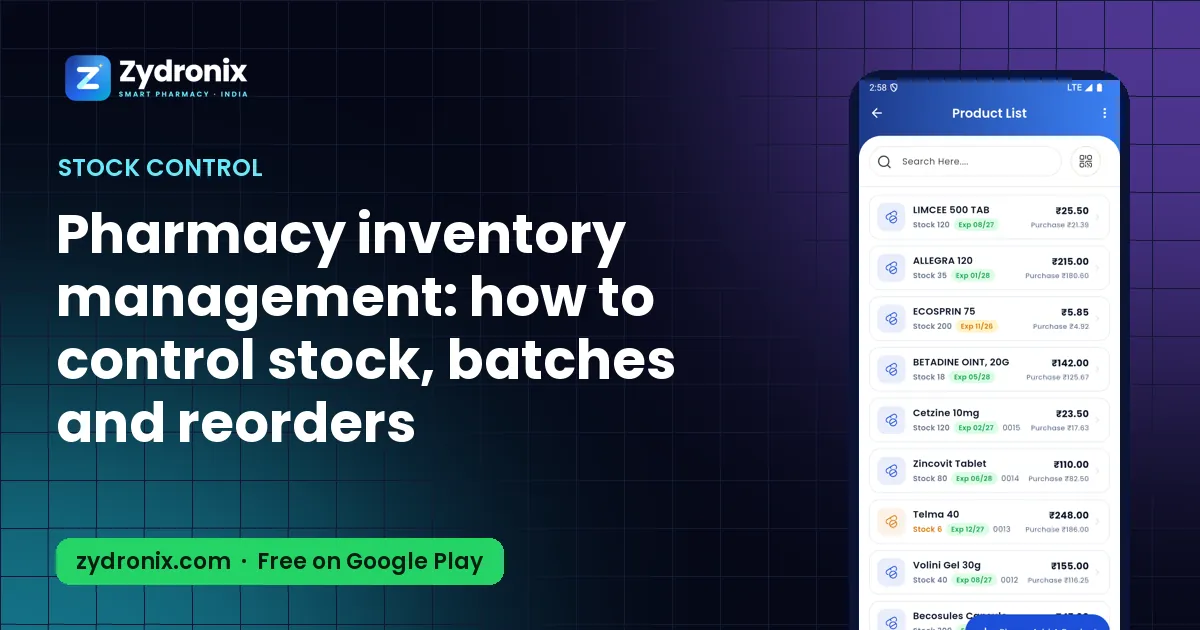
A typical medical store holds 1,500 to 4,000 items. Without a system, the owner ends up buying by memory: some items run out while others sit until they expire. This guide explains a simple stock system and where software saves the most time.
The three numbers that matter for each medicine
For each item, you need three numbers at hand:
- Stock on hand, by batch.
- Average sales per month.
- Days to expiry for each batch.
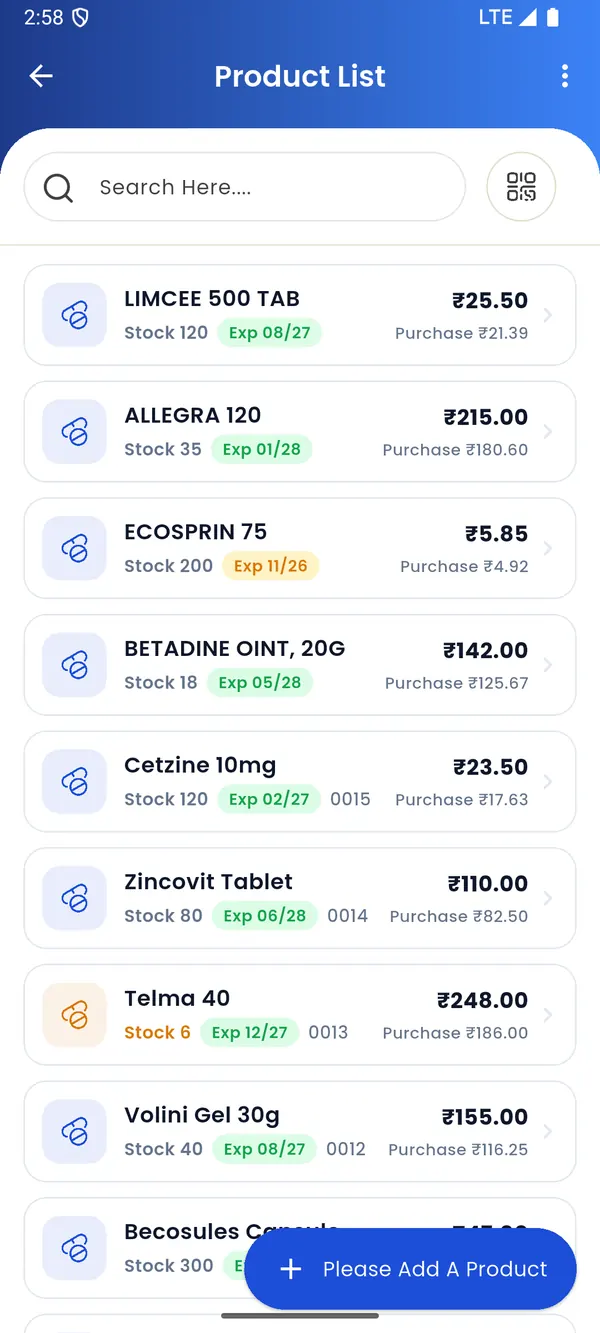
With these, every buying decision gets easier. An item with 40 strips in stock that sells 10 a month and expires in 3 months is a problem. An item with 5 strips that sells 30 a month needs an order today.
Set minimum levels for fast movers
For your top 200 items (by sales), set a minimum stock level. A common starting rule is about one to two weeks of sales, adjusted for how quickly your distributor delivers. When stock falls below the minimum, the item should appear on a low-stock list.
Zydronix shows a low-stock list on the home screen. On the Pro plan and above, the smart reorder list uses your recent sales to suggest how much to order.
Reorder in one place
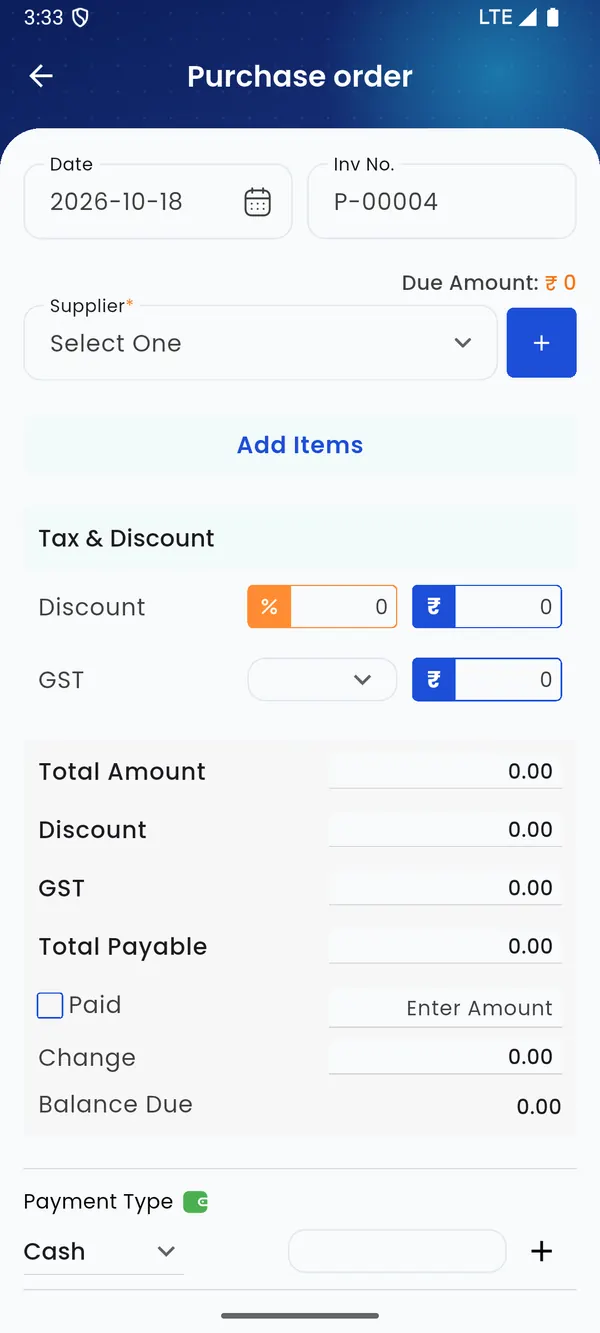
Instead of writing a shortage book, build the order from the reorder list. Sort it by distributor, check the quantities, and send it. A purchase order in the software also helps you check the supplier's bill when goods arrive: did you get what you ordered, at the agreed rate?
Try Zydronix free on your phone
GST billing, batch and expiry, udhaar and the H1 register. The free plan has no end date.
Find and clear dead stock
Dead stock is an item that has not sold in 90 days or more. It ties up money and often ends as expiry loss. Once a quarter:
- List items with no sale in 90 days.
- Return what the distributor will accept.
- Stop reordering them.
- For items with a few months left, move them to the front and mention them to regular customers where suitable.
Same-salt substitutes
When a brand is out of stock, many patients will accept another brand with the same salt and strength, if the doctor's prescription allows it. Zydronix shows same-salt items in stock, so the counter does not lose the sale. Always follow the prescription and the rules on substitution.
Monthly stock audit
Software stock and shelf stock drift apart over time: breakage, billing errors, free goods not entered. A rolling audit fixes this without closing the shop.
| Week | Count |
|---|---|
| Week 1 | Your top 100 items by value |
| Week 2 | Antibiotics and H1 items |
| Week 3 | Refrigerated items (insulin, vaccines) |
| Week 4 | Slow movers and near-expiry |
Correct the software stock after each count and note the reason.
What pharmacy inventory software automates
| Task | By hand | With software |
|---|---|---|
| Stock after each sale | Not tracked | Updated on every bill |
| Batch and expiry | Look at the strip | Stored at purchase, shown at sale |
| Shortage list | Notebook | Low-stock and reorder lists |
| Expiry check | Shelf walk | Near-expiry list |
| Purchase entry | Typing | AI scan of the supplier bill |
| Stock value | Estimate | Report |
ABC analysis for a medical store
Not every item needs the same attention. ABC analysis sorts items by sales value.
| Class | Share of items | Share of sales value | How to manage |
|---|---|---|---|
| A | About 10 to 20% | About 70 to 80% | Never run out; check daily; tight reorder levels |
| B | About 30% | About 15 to 20% | Weekly check; normal reorder |
| C | About 50 to 60% | About 5 to 10% | Buy small; watch expiry; review quarterly |
A sales report sorted by value gives you this list in a minute. Spend your attention on A items; most stock-outs that lose customers happen there.
Cold-chain stock
Insulin, vaccines and some eye drops need 2 to 8°C storage. Keep them in a separate refrigerator section, check the temperature daily, and count them in your weekly audit. These items are expensive, so a single power cut without backup can cost more than a month of expiry loss.
Stock value and working capital
Most of a pharmacy's money sits on the shelf. Check your stock value report once a month. If stock value grows faster than sales, you are buying more than you sell, usually through schemes or slow movers.
हिंदी में सारांश
फार्मेसी इन्वेंटरी मैनेजमेंट का मतलब है हर दवाई का बैच के हिसाब से स्टॉक, एक्सपायरी, महीने की बिक्री और रीऑर्डर का समय जानना। तेज़ बिकने वाली दवाइयों का मिनिमम लेवल रखें, रीऑर्डर लिस्ट से ऑर्डर बनाएं, 90 दिन से न बिका माल पहचानें और हर हफ़्ते थोड़े-थोड़े आइटम गिनें। Zydronix हर बिल और खरीद से स्टॉक अपने आप अपडेट करता है।
Frequently asked questions
What is pharmacy inventory management software?
It is software that tracks medicine stock by batch and expiry, updates stock from every sale and purchase, and gives low-stock, near-expiry and reorder lists.
How do I calculate reorder level for medicines?
Start with average daily sales multiplied by your distributor's delivery time in days, plus a small safety stock. Software can suggest quantities from recent sales.
How often should a medical store do stock audit?
A rolling audit every week, covering different groups of items, keeps stock accurate without closing the shop. Do a full count at least once a year.
What is dead stock in a pharmacy?
Items that have not sold for 90 days or more. They tie up money and often end as expiry loss.
Can I manage pharmacy inventory on a mobile phone?
Yes. Zydronix keeps batch-wise stock, near-expiry and low-stock lists on Android, with a browser version on paid plans.
Try Zydronix free on your phone
GST billing, batch and expiry, udhaar and the H1 register. The free plan has no end date.

Written by the team that builds Zydronix, the pharmacy billing app made by Tej Growth in Panipat. Facts on GST and drug rules change, so confirm details with your CA or state drug control office. Questions or corrections: legal@zydronix.com.